
My Sister’s Keeper
Domestic Violence Awareness and Prevention
Program Outline
Introduction (5 minutes)
Welcome and share a brief overview of the topic Domestic Violence Awareness and Prevention. Emphasize the importance of recognizing signs of domestic violence and understanding how to help others, self-care strategies and prevention steps. Be sensitive to those in the room who may have experienced domestic violence and may be adversely affected by the topic
Educational Information (15 minutes) – hand out (attached pdf file)
- Recognizing signs of domestic violence:
- Physical signs (bruises, injuries)
- Emotional signs (fear, anxiety, depression)
- Behavioral signs (withdrawal from social activities, frequent absences from work or church)
- Helping someone in an abusive situation:
- Listening without judgment
- Offering resources and support
- Knowing when to involve authorities
- Self-care for survivors
- Seeking counseling or joining support groups
- Building a strong support network
- Engaging in activities that promote healing (e.g., journaling, prayer, exercise)
- Steps to prevent becoming a victim
- Setting and maintaining personal boundaries
- Recognizing red flags in relationships
- Creating a safety plan, if you suspect abuse
Suggested Web Links and YouTube Videos (5 minutes)
- The National Domestic Violence Hotline (https://www.thehotline.org/)
- YouTube: “What is Domestic Violence? Types, Symptoms, Treatment and More”
Search on YouTube under this subject.
- Find local shelters and resource: domesticshelters.org
- Women’s Law – Legal information for survivors www.womenslaw.org
Empowered by Hope: God’s Presence in Our Pain
Life sometimes brings us into places of deep pain and suffering, and for many women, domestic violence is a reality that seems impossible to escape. It is in these moments, when we feel most alone, that God’s word reminds us of His unchanging presence and love.
Psalm 9:9 tells us, “The Lord is a refuge for the oppressed, a stronghold in times of trouble.” Imagine a woman who is trapped in a cycle of abuse, feeling as though every door to safety has been closed. Yet, God is saying, “I am your refuge.” He is our sanctuary—a place of safety when everything around us feels unsafe. It’s it any wonder that they find this hard to believe.
Similarly, Psalm 34:17 assures us, “The righteous cry out, and the Lord hears them; He delivers them from all their troubles.” These words offer a profound promise; God not only hears our cries, but He also delivers us. In times of distress, when the situation seems hopeless, God’s deliverance may come in many forms—a friend reaching out, a community offering support, or an inner strength we never knew we had.
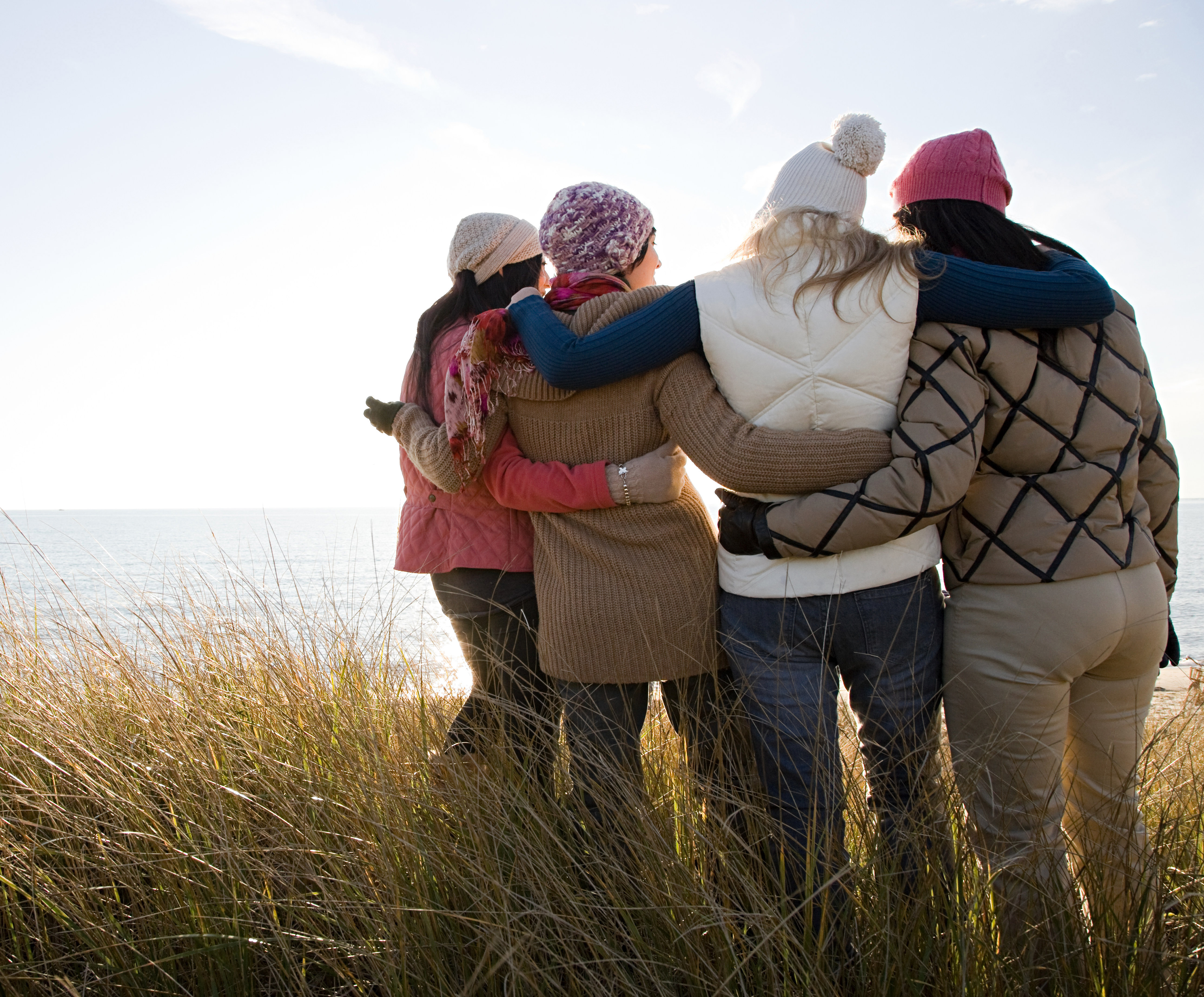
God calls us to be a refuge for one another. As Christians, we are empowered to extend God’s love and care to those in need. We become “our sister’s keeper,” standing beside those who cannot stand on their own, speaking up for those whose voices have been silenced, and praying fervently for those in bondage.
Let’s be reminded that we are never alone. God’s presence is always with us, guiding us toward safety, hope, and healing. Let us walk in His strength, advocate for one another, and hold on to the truth that God is our ultimate deliverer.
Before the closing prayer play the song “Alone, But Not Alone.” Search on YouTube for a video using the words “Joni Eareckson Tada Alone yet not Alone.” Or the Pasadena Songsters have version of this song, which is also on YouTube.
Prayer
Heavenly Father, we thank you for your presence in our times of trouble. We ask for Your strength and courage to stand against domestic violence, to be voices for the voiceless, and to find hope and empowerment in your love. Comfort those who are hurting and bring healing and peace. Amen.
Optional Activities (chose one or both as time allows):
“Hope and Empowerment” Bracelet
The activity serves as a tactile and creative way for women to reflect on the themes of hope and empowerment, reinforcing the message of being “our sister’s keeper.” Each bracelet becomes a physical reminder of their commitment to awareness and support in domestic violence situations.
Materials Needed
- Elastic cord or stretch bracelet string
- Beads in various colors (choose colors with meaning, such as purple for domestic violence awareness, white for hope, and green for renewal and new beginnings)
- Small silver or gold letter beads to spell words like “Hope,” “Safe,” “Strength,” or “Peace”
- Scissors
- Small trays or bowls for organizing beads
- Inspirational verse cards (with Psalm 9:9 or Psalm 34:17)
Instructions
- Introduction (2 minutes)
Explain that the bracelets are a symbol of their commitment to being vigilant, supportive, and prayerful for those impacted by domestic violence. Share the significance of the bead colors and letter options.
- Crafting (10-15 minutes):
- Each woman selects beads that resonate with her, incorporating meaningful colors and a word that reflects her prayers or intentions for someone facing domestic violence. Thread the beads onto the elastic cord, ensuring they’re spaced evenly and aesthetically. Tie off the bracelet securely, leaving enough stretch to wear comfortably.
- Reflection (5 minutes):
As the women finish, invite them to reflect on the bracelet they created and what it symbolizes for them personally. Encourage them to pray silently or write a brief prayer or commitment on the provided verse cards.
- Outcome
By creating a bracelet, the women have a tangible reminder of their awareness and commitment. The act of crafting allows for a meaningful discussion and reinforces the day’s teachings in a memorable way.
“Helping Hands” Commitment Wall
This activity focuses on creating a visual representation of collective commitment to recognizing signs of domestic violence and supporting those affected.
Materials Needed
- Large sheets of butcher paper or a poster board
- Markers, pens, and colored pencils
- Scissors
- Pre-cut hand shapes or construction paper in various colors
Instructions (2 minutes):
Explain the significance of using their hands as a symbol of action, support, and commitment.
Hand Shape Activity (10-15 minutes)
Ask each woman to trace and cut out their hand shape on a piece of colored paper. On the handprint, write a specific action or commitment they will make to help those impacted by domestic violence (e.g., “I will listen without judgment,” “I will educate myself on local resources,” “I will be vigilant in recognizing signs.”) Encourage them to decorate their handprint to personalize it.
Reflection (5 minutes):
Gather the handprints and create a “Helping Hands” wall or poster as a collective pledge. Discuss some of the commitments and pray over the wall, asking for courage and strength to fulfill these promises.
Group Discussion and Sharing (10 minutes)
Encourage participants to share personal experiences or thoughts related to domestic violence awareness. Discuss ways the group can support each other and their community.
Practical Tips for Women (10 minutes)
- Recognizing Signs of Abuse. Pay attention to subtle changes in behavior or mood. Notice unexplained injuries or frequent “accidents.”
- Steps to Take if You Suspect Abuse: Approach with empathy and without judgment. Encourage them to talk to a professional or reach out to local resources.
- Supporting a Friend. Be a safe, non-judgmental listener. Offer practical help, such as providing transportation or a safe place to stay.
- General Safety Planning: Keep important documents, emergency contacts, and some money in a safe, accessible place. Plan an escape route and rehearse it.
Closing and Additional Resources (5 minutes)
- Distribute any handouts
- Recap key points and encourage ongoing awareness and support.
- Share additional resources and contacts for local support groups and shelters.
- Invite participants to reach out for further support or counseling.
